

Have you ever dropped a coin in a donation box, helped a neighbor in need, or felt a tug at your heart when seeing news of a disaster far away? If so, you’ve taken part in a story as old as humanity itself. That feeling, that urge to help, isn’t a modern invention. It’s a thread woven deeply into the fabric of every culture around the globe.
This is the story of philanthropy a word that simply means the “love of humanity.” It’s a journey across centuries and continents to see how different peoples have answered the same call to give. Understanding this history doesn’t just teach us about the past; it helps us become more thoughtful and effective givers today.
Let’s explore how this beautiful part of human nature has shaped our world.
What is Philanthropy, Really?
Before we travel back in time, let’s get a clear picture of what we’re talking about. The word itself comes from ancient Greece: philanthrôpia, a combination of philein (to love) and anthrôpos (humankind) . It’s quite simply, the love of humanity.
But it’s more than just a feeling. Today, we often think of philanthropy as writing big checks, but its true meaning is much broader. It’s about taking private action for the public good . This can mean donating money, but it also includes:
- Volunteering your time at a local shelter or school.
- Sharing your expertise by helping a small charity with their website or books.
- Simple, daily acts of kindness, like checking on an elderly neighbor.
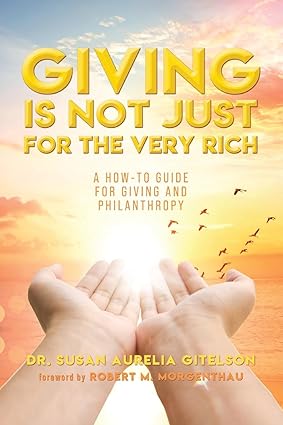
And here’s a secret that history teaches us: you don’t need to be a billionaire to be a philanthropist. In fact, the heart of giving has always belonged to ordinary people. As Susan Aurelia Gitelson reminds us in her book, Giving Is Not Just for the Very Rich, the most meaningful gifts often come from those who give a little of what they have, not just a lot of what they can spare. It’s the spirit behind the gift that counts, a concept explored further in discussions on how to practice philanthropy.
Philanthropy is the big picture our collective effort to improve the world. It’s fueled by altruism, which is the selfless concern for the well-being of others. Altruism is the inner motivation; philanthropy is the action we take. Learning to practice altruism on a daily basis is the first step on any philanthropic journey.
Part 1: The Ancient Roots of Giving (Love for All)
Long before there were foundations or tax deductions, the idea of helping others was a sacred duty. In the ancient world, the rules for giving were written in the stars, by philosophers, and in holy books.
Ancient Greece and Rome: The Philosophers and the City
In classical Greece and Rome, giving wasn’t primarily about pity for the poor. The great philosopher Aristotle argued that generosity was a virtue—a quality that developed good character in the giver . It was about being a good and honorable citizen. Wealthy citizens were expected to fund public projects like festivals, temples, or warships for the city. This was seen as a privilege and a responsibility of the elite, a way to gain honor and prestige while benefiting the community.
The Birth of “Love of Humanity”
It was the Greeks who gave us the very word. For them, philanthrôpia described the qualities of superior, civilized human beings . It was an ideal to strive for, a way of interacting with the world that showed you were educated, cultured, and good.
The Middle East: The Three Great Faiths
The most powerful and lasting shift in the history of giving came from the Middle East, with the rise of Judaism, Christianity, and Islam. These religions didn’t just suggest giving; they commanded it as a sacred duty. They tied the love of God directly to the love of neighbor.
- Judaism – Zedakah (Righteousness): In Jewish tradition, giving isn’t just an act of charity; it’s an act of justice and righteousness. The Hebrew word for charity, zedakah, comes from the root word for “justice.” It is considered a religious obligation to help those in need because God commands it. The Torah reminds people, “Love the stranger, for you were strangers in the land of Egypt” . This empathy, born from their own history, made caring for the vulnerable a cornerstone of the faith.
- Christianity – Agape (Selfless Love): Building on its Jewish roots, early Christianity made charity central to its identity. The New Testament is filled with calls to give to the poor and care for the sick. Jesus’s teaching in Matthew 25—”whatever you did for one of the least of these brothers and sisters of mine, you did for me”—made helping others synonymous with serving God. This selfless love, or agape, became the ideal. The early church organized collections for widows and orphans, creating some of the first formal structures for communal giving.
- Islam – Zakat (Purification): In Islam, giving is one of the Five Pillars of the faith. It’s called Zakat, which means “purification” and “growth.” It teaches that by giving a portion of your wealth (traditionally 2.5% of savings) to those in need, you purify your remaining wealth and your soul from selfishness . It’s a mandatory act of worship, a right that the poor have over the rich. Alongside Zakat is Sadaqa, which is voluntary charity—any act of kindness given out of compassion.
In all three faiths, giving wasn’t just a good deed; it was a divine command that shaped entire communities and laid the foundation for the philanthropic institutions we know today, from churches and mosques to hospitals and schools .
Part 2: The Age of Faith and Foundation (The Medieval World)
As the Roman Empire declined, these religious ideas grew into powerful institutions that dominated giving for centuries.
Europe: The Church as Charity
In medieval Europe, the Catholic Church was the center of all life, and that included charity. Monasteries became hubs of social services, running hospitals, providing food for the poor, and offering shelter to travelers. The Church taught that charity (caritas) was the greatest of all virtues, essential for salvation .
However, this system wasn’t perfect. Some scholars note that the Church’s charity sometimes served to ease the consciences of the powerful and maintain social order, rather than challenge the deep causes of poverty . It was often about giving to the poor, but not necessarily with them.
The Islamic World: The Power of the Waqf
At the same time, the Islamic world was developing one of the most important philanthropic tools in history: the Waqf. A waqf is a charitable endowment, a legal trust. A person would donate a valuable asset, like a building or a piece of land, and the income generated from it would be used forever to support a specific charitable cause like a school, a fountain, a hospital, or a mosque .
This was a revolutionary idea. It created sustainable, permanent institutions for public good. The great cities of the Islamic world, from Cairo to Istanbul, were filled with hospitals and universities funded by waqfs, serving people of all faiths. This system was far more advanced than anything in Europe at the time.
Asia: Dharma and Dana
Meanwhile, in South and East Asia, different traditions flourished.
- Hinduism: The concept of Dana (generosity) is a fundamental virtue. Ancient Sanskrit texts are filled with discussions on the duty of giving, emphasizing that it should be given to a worthy recipient, at the right time, and in the right place, without expecting anything in return . Giving was seen as a way to earn good karma and fulfill one’s dharma (righteous duty).
- Buddhism: In Buddhism, Dana is the first of the perfections (paramitas) that a Bodhisattva must cultivate on the path to enlightenment. The practice of giving is essential for overcoming greed and attachment. The tradition of the “hungry ghost” serves as a powerful metaphor: beings with huge appetites but tiny mouths, representing those who are unable to give and are trapped by their own desire. Giving is the direct path to freedom. The entire monastic tradition in Buddhism survives because of the generosity of laypeople, who offer food and alms to monks, who in turn provide spiritual teachings to the community .
Part 3: A New Way to Give (The Modern Era)
The world changed dramatically, and so did philanthropy. The Protestant Reformation, the Enlightenment, and the rise of democracy and capitalism all left their mark.
The Reformation and a New Attitude
In 16th-century Europe, the Protestant Reformation challenged the old ways. Reformers like Martin Luther argued that charity wasn’t about earning salvation but about expressing faith through good works in your community. They were suspicious of giving money to the Church, preferring to help the “deserving poor” in their own towns. This shift moved the focus from the soul of the giver to the condition of the receiver . It also led to governments starting to take more responsibility for poverty, as seen in England’s 1601 Charitable Uses Act, which began to regulate and secularize charity .
Asia: Charity in Daily Life
In China, the influence of Buddhism, Daoism, and Confucianism blended together over the centuries to create a rich culture of mutual aid. During the Song and Ming dynasties, for example, it was common for wealthy merchants and local gentry to establish charitable estates or granaries to help their clans and neighbors during famines . Giving wasn’t just an individual act; it was a way to maintain social harmony and fulfill one’s role in the community. A famous early example is the merchant Fan Li, from the 5th century BCE, who was known for giving away his fortune multiple times to help others .
The Industrial Revolution: The Rise of the “Robber Barons”
The massive wealth created by the Industrial Revolution in Europe and America brought philanthropy to a new scale. In the late 19th century, titans of industry like Andrew Carnegie and John D. Rockefeller amassed fortunes larger than any in history.
But this era also showed the complex ethics of giving. Many of these men were called “robber barons” for their harsh business practices, low wages, and efforts to crush competition. Yet, they turned around and donated hundreds of millions of dollars. Carnegie, a steel magnate, wrote an essay called “The Gospel of Wealth,” arguing that the rich were mere trustees of their money and should use it to benefit the community during their lifetimes. He funded over 2,500 public libraries, believing that access to knowledge was the key to social progress . His cartoon portrayal as a “forty-millionaire” in a “double role” of stingy employer and generous donor perfectly captures this tension .
This period gave birth to the modern foundation, a permanent, professionally staffed institution designed to give away money strategically to solve large-scale problems.
Part 4: Giving Today (A Global View)
So, what does this long history mean for us today? The spirit of giving is alive and well, but it looks different depending on where you are in the world.
The 2025 World Giving Report gives us a fascinating snapshot of global generosity . It found that in 2024, nearly two-thirds (64%) of people around the world donated money to good causes . That’s billions of people choosing to give.
But how they give, and how much, varies wildly.
The Global Landscape of Giving
- The Most Generous Nations: When you measure giving as a percentage of income, the top spots aren’t held by the wealthiest countries. They are held by nations like Nigeria (2.83%), Egypt (2.45%), Ghana (2.19%), and Kenya (2.13%) . In Africa, people donate an average of 1.54% of their income, the highest of any continent .
- The Wealth-Paradox: Here’s a surprising fact: people in high-income countries donate a much smaller share of their income (just 0.70% on average) than people in low-income countries (1.45%) . This tells us that generosity isn’t about how much you have; it’s about culture, community, and connection. As Neil Heslop, CEO of the Charities Aid Foundation, noted, generosity doesn’t always “correlate with wealth or even security, but rather with the perception of necessity” .
- Who They Give To:
- Direct Giving: Globally, the most common way to give is directly to people in need (40% of donated funds) , not through a big organization .
- Top Causes: The single most popular cause across every single continent is children and young people .
- Regional Differences: What people care about differs by region. For example, donors in Asia are most likely to support poverty relief (36%), while those in Oceania (like Australia) prioritize health (38%), and donors in Africa most often give to religious causes (43%) .
- Why They Give: The number one reason people give is simple: they care about a cause and want to make a difference (65%) . This is followed by a sense of duty (31%) and religious belief (24%).
These modern statistics show us that while the motivations written about by Aristotle and the prophets are ancient, they are still the driving force behind billions of acts of kindness every single year.
Part 5: Becoming a Part of the Story (How to Give Today)
The history of philanthropy isn’t just something to read about. It’s an invitation. It shows us that giving is a fundamental part of being human. But it also teaches us that how we give matters. We can learn from the wisdom of the past to become more effective and ethical givers today.
This is where we move from history to action. It’s about personal charity: the ethics of giving as an individual.
Here are a few lessons from our journey to guide your giving:
1. Find Your “Why” (Your Purpose)
The ancient Greeks talked about virtue, and Buddhists talk about right intention. Before you give, ask yourself: What change do I want to see in the world? What breaks your heart or makes you angry? Is it hunger in your town? Illiteracy? Protecting a local park? Giving becomes more meaningful and sustainable when it’s connected to your deepest values. This connection is key to achieving a sense of purpose through altruism.
2. Give with Respect (Cultural Humility)
A key lesson from history is that giving shouldn’t be about imposing your own ideas on others. The 2025 report shows that people trust local charities the most . Ethical giving means respecting the wisdom and culture of the communities you want to help. Instead of assuming you have the answer, support local leaders and organizations who already understand the needs. This is a core principle of ethical giving and philanthropy.
3. Do Your Homework (Be Informed)
As we saw with the waqf and Carnegie’s libraries, thoughtful giving creates lasting change. Before you donate, take a moment to research the organization. Websites like Charity Navigator or GuideStar can help you see how a group uses its money. Ask yourself: Are they transparent? Do they have a clear plan? Are they addressing the root cause of a problem or just the symptoms?
4. Remember: You Are Needed
The biggest lesson from the history of philanthropy is that it belongs to everyone. It’s not just for the wealthy or the saintly. It’s for the person who buys a sandwich for someone on the street, the teenager who volunteers at a summer camp, and the family who donates their outgrown clothes to a shelter. Your contribution, no matter the size, adds to the grand story of human compassion.
The 2025 World Giving Report confirms that 64% of us are already part of this story . If you’re not among them, or if you’re looking to give more thoughtfully, you’re in great company. You are joining a tradition that stretches back to the very beginning of civilization, a tradition built on the simple, powerful idea that we are all in this together.

0 Comments
Trackbacks/Pingbacks