

What makes a person willingly give away their own money, personal time, or limited resources to help a complete stranger—someone not blood-related and unknown? This question has fascinated psychologists, economists, and philosophers for centuries.
In modern times, researchers primarily studied altruism or altruistic behavior through a lens of self-interest, viewing helping behaviors as veiled attempts to gain favor or propagate genes. But something revolutionary has come to light, especially when it comes to understanding the human heart.
The psychology of generosity is wired into the very fabric of human brains, suggesting that people are not selfish creatures—rather, humankind is biologically and socially inclined toward kindness and care.
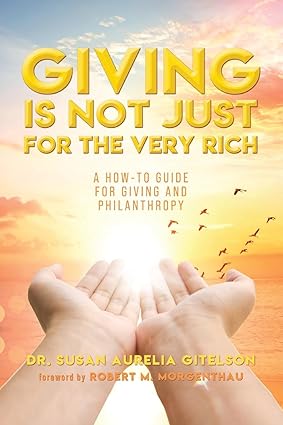
Susan Aurelia Gitelson‘s incredible book, Giving Is Not Just For The Very Rich, serves as an inspiring, practical guide for different people. The book demonstrates that the benefits of giving are available to individuals, regardless of the size of their wallets. Read this article to learn more about giving.
Neural Pathways of Giving: The “Warm Glow”
Feeling that sudden tingle of warmth when giving back to someone—that incredible sense of satisfaction? The answer lies deep within the brain.
A study about generosity, which was published in March 2024, shows that neuroimaging revealed that acts of donating money activate the brain’s reward system, specifically the ventral striatum (VS). This is the same area that responds to primary rewards like food, money, and sex.
In essence, the brain treats a donation to a charity or organization the same way it treats a delicious meal. This sensation is often called “warm glow”—the positive emotional state derived from the act of giving itself.
Moreover, the research also discusses that neural asymmetry shows how generous norms, activities, and engagements increase activity in the lateral prefrontal cortex (LPFC) and the ventral striatum. So, what does it mean for a person? And so, it means that aligning with generous others provides a “warm glow of herding”; aligning with selfish norms does not produce the same effect, and can even feel threatening to social connectedness.
This result suggests that the psychology of generosity is deeply social. The brain rewards an individual not just for giving, but for giving with others in a collective, prosocial context.
Altruistic Motivation: More Than Just Feeling Good
While “warm glow” explains the personal benefit of giving, does true, selfless altruism actually exist? For years, the field was dominated by the “Negative State Relief Model,” which argued that people helped others primarily to reduce their own personal distress or sadness.
However, psychologist C. Daniel Batson challenged this idea with the Empathy-Altruism Hypothesis. He demonstrated that when a person feels empathetic concern and giving—pure compassion for another’s suffering—their motivation to help becomes altruistic, meaning they help regardless of whether it benefits them.
Furthermore, the research features two distinct emotions triggered when witnessing suffering: personal distress (anxiety, fear), which leads to egoistic helping, and empathetic concern (compassion), which leads to genuine altruism. The result confirms that a person’s drive or willingness to serve others is not a sophisticated form of selfishness; the capacity for selfless care is a genuine part of human nature.
Looping back, the result aligns with the “Selective Investment Theory,” which discusses that strong social bonds evolved specifically to promote altruistic behaviors, even when those behaviors put the individual in harm’s way.
The Positive Loop: Happiness, Well-Being, and Helping
If genetics and neural pathways predispose human beings to altruism, does practicing generosity, sharing, and philanthropy actually make people happier, or even healthier? The evidence overwhelmingly says yes.
A 2021 study published in The Journal of Positive Psychology found a stunning paradox: attempting to make happiness from helping others increases happiness more than attempting to make oneself happy.
A couple of experiments prove this result. For instance, participants who feed a stranger’s parking meter show a greater boost in mood than those who feed their own meters. In another study, altruism (including blood donations, helping strangers, and volunteering) was consistently and strongly associated with subjective well-being, regardless of cultural context. Hence, it creates a powerful positive feedback loop: generous people are happier, and happier people tend to be more generous.
The Gratitude Reciprocity Cycle
Generosity flows in many directions, interacting with hundreds of lives and touching thousands of hearts. When someone receives a gift or an act of kindness, it often triggers a powerful psychological response known as the gratitude reciprocity cycle. This social norm often dictates that when one person gives to another, the recipient feels a strong obligation to give back or pay it forward.
In this sense, the cycle is a building block of functional human societies and cultures, creating webs of mutual support and obligation that strengthen bonds and communities. Cross-cultural studies on children provide insight into the roots of this behavior. In 2023, research on preschoolers found that Spanish-speaking Latino children from more collectivist backgrounds were “flat out more generous” than their English-speaking peers, consistently choosing options that gave more to an anonymous classmate. With that, the result suggests that cultural values and home environments shape altruistic behavior motivation quite early.

Childhood Roots of a Generous Life
The seeds of generosity are planted early—and should be entrenched at a young age. A massive global study published in 2025 examined 202,898 individuals across 22 countries to determine which childhood factors predicted adult prosociality. While many factors were influential to a child’s personality, the research showed that specific childhood experiences showed “moderately robust” associations with later giving.
Notably, childhood factors did not envision both charitable giving and helping strangers uniformly. However, it suggests that distinct pathways lead to different forms of generosity, whether it’s helping a person cross the street or giving away personal items.
Nevertheless, the research establishes that cultural differences in generosity are measurable even in preschool years. Additionally, it highlights the powerful role of environment and upbringing, especially in homes, in how a child interacts with others.
Cultivating Generosity: Intentional Giving
Understanding the psychology of generosity allows individuals to cultivate it deliberately, whether for personal preference or not. Here are some things people can do to nurture generosity within themselves and with others:
1. Smart Small
For those starting out in their philanthropic journey, they can start small. Gitelson’s book, Giving Is Not Just For The Very Rich, emphasizes how people can start giving without the outside pressure. Donating a small monthly amount of $10 can be enough.
2. Give Time, Not Just Money
People can give their hours as volunteers instead of donating their money. Time spent helping programs and projects is valuable and important as well. Additionally, organizations and charities need volunteers.
3. Focus on Connection
Whether doing volunteer work or sending money, individuals should also concentrate on building connections with peers. Creating bonds amplifies well-being.
4. Make It a Habit
The neural pathways for generosity strengthen with use. Keep doing the work even when exploring other things. Importantly, it should be part of a person’s life.
In a world that often feels divisive, the science of generosity reveals a shared humanity. When one person helps another, they are activating ancient neural circuits designed to foster community, happiness, and trust. Don’t forget to grab a copy of Giving Is Not Just For The Very Rich as you begin your philanthropic journey!

0 Comments
Trackbacks/Pingbacks