

In 2010, three of the world’s most influential figures issued a challenge that would reshape the landscape of modern philanthropy. They asked the wealthiest individuals on the planet to make a moral commitment: give away the majority of their money to combat society’s most pressing and immediate problems. This initiative, now known as the Giving Pledge, has evolved into an international movement spanning over 250 signatories from 30 countries.
Understanding the giving pledge meaning is essential for anyone interested in how the ultra-wealthy are redefining their role in solving global challenges. While ordinary people can still give their portion to helping others, this article discusses how the super-rich are contributing.
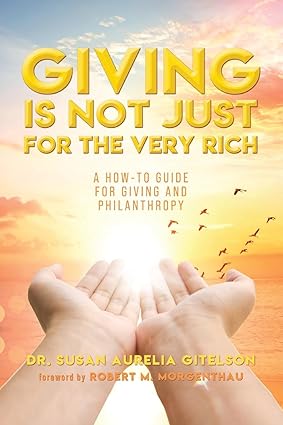
Susan Aurelia Gitelson’s book, Giving Is Not Just For The Very Rich, serves as an important complementary resource, reminding readers that while billionaires make headlines, meaningful philanthropy is accessible to people at every income level.
What Is the Giving Pledge? Definition and Core Principles
The philanthropic pledge definition is straightforward yet powerful: The Giving Pledge is a moral promise, the willingness and graceful reassurance, by the world’s wealthiest (and probably influential) individuals and families to give the majority of their wealth—more than 50 percent—to charitable causes, either during their lifetimes or upon their death.
Founded in 2010 by Bill Gates, Melinda French Gates, and Warren Buffett, the initiative was born from a simple yet bold idea: if wealthy people began thinking about philanthropy earlier in their lives, they would be motivated to give more and start sooner.
The pledge is explicitly not a legal contract. It carries no enforcement mechanism or binding obligations. Instead, it represents a public declaration of intent, a promise made through a personal letter shared on the Giving Pledge website explaining why each signatory chose to give.
Since its launch, the pledge has inspired a broader cultural shift in how the wealthy perceive their responsibilities. And so, the pledge helped generate norms and traditions of generosity, which evolved into a connected and active global community.
How the Giving Pledge Works: Structure and Commitment
The charitable giving pledge operates on a model of voluntary association rather than contractual obligation. When billionaires sign the pledge, they are not signing a legally binding document. There is no enforcement mechanism requiring them to actually transfer their wealth. Instead, it is their morals pushing them to do good.
What signatories do provide is a public letter articulating their reasons for giving. These letters are published on the Giving Pledge website, creating transparency that allows the public, journalists, and watchdog organizations to hold signatories accountable for their promises.
Signatories channel their philanthropy through various vehicles, including private family foundations and donor-advised funds (DAFs).
History and Growth: Milestones of the Movement
The Giving Pledge was formally announced in June 2010, with 40 American philanthropists joining the initial group. Their aggregate wealth at that time was $125 billion. As the initiative garnered attention and traction, the growth was immense.
As of August 2025, the pledge had 256 signatories from 30 countries, representing a total net worth of approximately $600 billion. The roster includes some of the most recognizable names in business and technology: Elon Musk, Mark Zuckerberg, MacKenzie Scott, Larry Ellison, and many more.
However, there are fewer signatories in recent years, prompting people to question the relevance and importance of this commitment and pledge. Are the newer generations of wealth unwilling to part with their earthly gains?

Notable Signatories and Their Giving
Philanthropic norms shifting can be observed through the actions of several prominent signatories who have demonstrated extraordinary commitment to their pledges.
American investor Warren Buffett has donated more than 60 billion as part of his commitment to the pledge. This amount, and his level of dedication, make him one of the most generous signatories in the group. On the other hand, Bill Gates has contributed 50 billion through his foundation with his former spouse, Melinda French Gates, the Bill & Melinda Gates Foundation.
MacKenzie Scott, American novelist, has distinguished herself through her rapid, trust-based approach to giving, donating $7.2 billion to more than 120 organizations in 2025 alone.
The late businessman Charles Feeney, who signed the pledge in 2011, gave away his entire $8 billion fortune during his lifetime—a model of “giving while living” that inspired the pledge’s founders.
According to the Institute for Policy Studies, however, among the 22 deceased pledgers, only eight had actually given away enough to meet the “half of wealth” pledge by the time of their death. This discrepancy highlights the gap between moral commitment and measurable action.
Criticisms and Limitations of the Giving Pledge
Despite its noble intentions, the Giving Pledge has attracted substantial criticism from journalists, watchdog groups, and observers in the philanthropic sector.
The first major criticism centers on the lack of enforcement. Because the pledge is voluntary and non-binding, critics argue that signatories may gain public recognition without necessarily donating the promised share. A 2025 analysis by the Institute for Policy Studies found that the 32 original U.S. pledgers who remain billionaires, have collectively become about 166 percent wealthier since signing on in 2010. Their wealth has grown faster than their giving, meaning they have not meaningfully reduced their fortunes despite their promises.
The issue of donor-advised funds (DAFs) and foundations has also drawn scrutiny. The median payout rate for these intermediary vehicles is 9.2 percent—above the 5 percent required for foundations but generally below their growth rates. As a result, many of these charitable funds continue to grow rather than distribute resources to working charities. Critics argue that wealthy donors receive immediate tax benefits for contributions that may not reach the public for years or decades.
The Giving Pledge vs. Everyday Giving: A Critical Distinction
While the Giving Pledge represents high-profile philanthropy at the billionaire level, Susan Aurelia Gitelson’s Giving Is Not Just For The Very Rich provides an essential counterbalance. Her work emphasizes that meaningful giving is not reserved for the ultra-wealthy. The philanthropic norms shifting that the Giving Pledge has helped create—openness about giving, strategic approaches to impact, and multi-generational commitment—can be adopted by donors at any income level.
The creation of the Giving Pledge has helped destigmatize talking about wealth and giving, encouraging more transparent conversations about philanthropy that extend beyond billionaire circles. The pledge’s emphasis on learning and connection has produced resources and best practices accessible to all donors.
Generosity in Different Forms
The giving pledge meaning extends beyond billionaire promises. It represents a fundamental shift in how the world’s wealthiest individuals perceive their relationship to society. Over fifteen years, it has helped create new norms of generosity, encouraging transparency about giving and fostering a global community dedicated to solving urgent problems.
However, it has also revealed the limitations of purely voluntary commitments. None of this diminishes the reality that effective, generous giving is available to everyone. So, if you want to start giving, learn about the details you need through Susan Aurelia Gitelson’s book, Giving Is Not Just For The Very Rich. Grab your copy now!

0 Comments