

Photo by pressfoto
Many people want to help others. Helping is essential to the human experience and vital for our individual and collective becoming. But a lot feel lost about where to even start.
The truth is that effective giving begins long before you write a check or sign up to volunteer.
The most important step to charity involves understanding yourself and discovering what it is that you personally care about, and then finding the right organizations that will help you get involved.
This process of coming together with the right groups makes your giving more meaningful and powerful. Learning how to choose a charity aligned with your values helps you avoid wasting money on groups that do not truly represent what you stand for. Without this step, even large donations can feel empty or fail to create real change.

Photo by DC Studio
Why Values Should Guide Every Donation
To have values is to have ideas on where to go and how to go about it. Without values, your giving is aimless and unlikely to really provide lasting impact. A value is akin to a notch on a map, acting as a compass for your donations and telling you which problems matter most to you and which solutions feel right.
Dr. Gitelson writes that before giving, you should ask yourself these questions:
What are your real purposes in life?
How can you express them best through giving of yourself and your assets?
These questions cut through confusion and hype.
Take a person who grew up poor, for example: they might value education scholarships above all else, while someone who lost a family member to cancer might pour energy into medical research.
Neither choice is wrong, and both are right because they come from genuine experience.
Dr. Gitelson warns that “there are so many worthwhile causes” that it can feel overwhelming. Without values as your filter, you could spread yourself too thin and accomplish very little.
Having values helps you say no to good causes so you can say yes to great ones that truly fit who you are. This focused approach makes coming together with the right organizations feel natural rather than forced.
Your giving then becomes an extension of your daily life, not a separate chore that is optional.
How to Discover What You Truly Care About
Finding your values takes honest reflection. Therefore, start by looking at your own life story. What challenges have you overcome? What help did you receive when you needed it most?
Many people give back to the very institutions that lifted them up.
Dr. Gitelson shares her own example, noting that her father “was devoted to giving book collections and microfilms of rare books and manuscripts to major universities.” His love of learning and books became the family’s charitable tradition.
Your own history holds similar clues about what matters to you.
Another practical step involves looking at where you already spend your time and attention. What news stories make you angry or tearful? What problems keep you up at night?
Dr. Gitelson recommends examining “your deepest concerns and purposes” before choosing any organization.
Write down three issues that genuinely bother you. Then write down three solutions you wish existed. These six items form the beginning of your personal giving plan.
Merging different paths from your past experiences and current passions creates a clear picture of your values.
Once you see that picture, finding charities that match becomes much easier.
Researching Charities Without Getting Overwhelmed
Many people stop before they start because researching charities feels like too much work. There’s so much trouble in the world, so many people working to fix it—and it can’t be mindboggling!
But smart research does not require becoming a detective.
Dr. Gitelson suggests starting with “watchdog agencies” that have already done the heavy lifting. Charity groups like Charity Navigator, GuideStar, and the Better Business Bureau’s Wise Giving Alliance rate thousands of organizations. These services tell you how much money actually goes to programs versus fundraising and salaries.
A charity might sound wonderful on its website, but the numbers reveal the full story. So, look for transparency above everything else.
Dr. Gitelson advises checking “what percentage of the funds they collect actually go to the cause and how much to overhead.” A good charity proudly shares this information. Be very careful with any group that hides its financial data or makes it hard to find. Also, pay attention to how long the charity has been working on its mission.
New groups can do great work, but established organizations usually have track records you can examine. Uniting for a common goal becomes safer and more effective when you take these simple research steps.
You do not need to become an expert on every charity; you only need to learn enough to feel confident in your choices.

Photo by rawpixel.com
Signs That a Charity Truly Matches Your Values
Numbers alone cannot tell you if a charity shares your values. You need to look at the people running the organization and the language they use. Dr. Gitelson suggests asking, “Who are the leaders? Do you know them personally? Have you been impressed favorably by what you have read about them?” Leaders who truly believe in their mission talk about the work with passion, not just statistics. They welcome questions and invite donors to see programs in action. A charity that matches your values will never pressure you for an immediate decision.
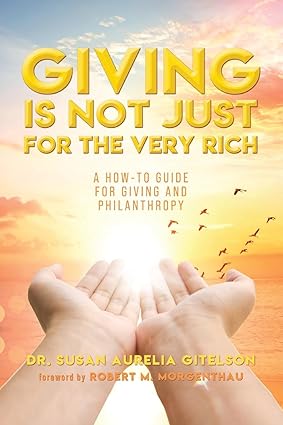
Dr. Susan Aurelia Gitelson’s Giving Is Not Just For The Very Rich provides all the tools you need if you’re ready to transform how you give and discover the deep joy of coming together with charities that share your heart.

0 Comments
Trackbacks/Pingbacks