

Photo by freepik
For millions of people around the world, the desire to help others is not just a feeling of kindness: it is a deep command written into their spirit by their religion.
This faith-based charitable giving comes from a sacred place, typically rooted in a specific faith. Whether it’s within a church, a mosque, a temple, or a synagogue, the message is similar: what you give to others, you give to God.
These fundamental religious doctrines ask believers to look beyond themselves. By looking at different religions, we see a common thread. Charity is not just an option; it is often a requirement for a life well lived: a way to show love for the divine by loving humanity.

Photo by rawpixel.com
Christianity: The Call to Love Thy Neighbor
Whoever is kind to the poor lends to the Lord, and he will reward them for what they have done.
In Christianity, the basis of faith for charity is found directly in the life of Jesus Christ, who taught his followers to care for the poor, the sick, and the outcast.
The Bible is full of verses commanding generosity. A particularly powerful story is the Good Samaritan, who helped a stranger when others walked by, showing that your neighbor is anyone in need.
These core theological tenets suggest that faith without works is dead. Belief must be active. When you feed the hungry or clothe the poor, you are serving Christ himself in a direct act of worship.
By giving, Christians mirror the grace they believe they have received from God. Thus, charity is a response to love, not a way to earn it.
This turns giving into a profound expression of reverence.
Judaism: The Concept of Tzedakah
The wicked borrow and do not repay, but the righteous give generously;
For the Jewish faith, charity is not just a kind gesture; it is a duty. Tzedakah, which comes from a Hebrew word meaning righteousness, is a major basis of faith for Jewish people.
Giving is the right thing to do; it is an act of justice, not just mercy.
The great Jewish scholar Maimonides wrote about different levels of giving, with the highest being helping someone become self-sufficient.
This idea is a pillar of their beliefs.
The Torah commands leaving the corners of fields for the poor to harvest and ensures that everyone has dignity and a way to provide for themselves. The community is responsible for taking care of its own.
When a person gives Tzedakah, they are partnering with God in perfecting the world.
Charity is a practical step toward repairing the world, a concept known as Tikkun Olam; thus, transforming philanthropy into a structured, holy responsibility.
Islam: The Purification Through Zakat
Take from their wealth ‘O Prophet’ charity to purify and bless them, and pray for them
In Islam, giving is so central that it is one of the Five Pillars. The pillar of Zakat is a mandatory form of charity where Muslims give a specific portion of their wealth to those in need.
This is a non-negotiable basis of faith for Muslims.
Zakat is seen as a purification of the remaining wealth. By giving away a part of what you own, you acknowledge that everything ultimately belongs to God.
These are laid out clearly in the Quran, which emphasizes caring for orphans, the poor, and travelers. Of course, beyond the mandatory Zakat, there is also Sadaqah, which is voluntary charity.
Any act of kindness, even a smile, can be considered Sadaqah, creating a culture where generosity is woven into daily life.
Giving breaks the love of money in a person’s heart and builds a compassionate community where no one goes without.
Buddhism: The Path of Compassion and Dana
And what is accomplishment in generosity? It’s when a gentleman lives at home rid of the stain of stinginess
—Dīghajāṇusutta—Bhikkhu Sujato
Buddhism offers a different but equally powerful view on giving. The practice is called Dana, which means generosity and is seen as the first step on the path to enlightenment.
The basis of faith here is the understanding that clinging to possessions causes suffering. By giving things away, you loosen your attachments.
This aligns with the Buddha’s core teachings, which hold that true happiness comes from letting go, not from holding on.
The Buddhist principles of belief hold that giving creates positive karma, leading to a better future. Monks rely on the generosity of laypeople for their daily food, and in return, they offer teachings.
This creates a cycle of spiritual and material support.
Giving is an act of compassion for others, but it is also a gift to yourself that purifies the mind and opens the heart, making it a fundamental spiritual practice for all levels of society.
Hinduism: The Duty of Dana
Da repeated three times, meaning Dāmyata, Datta, Dayadhvam—be self-controlled, be charitable and be compassionate…
—Brihadaranyaka Upanishad, Chapter V
Hinduism has a long and ancient tradition of philanthropy known as Dana, which is slightly related to the Buddhist concept above. Charity is considered a vital duty for a householder.
The basis of faith for this giving is the law of Karma.
What you give, you will receive in some form, either in this life or the next, encouraging a mindset of abundance and generosity. The ancient texts, the Vedas, describe charity as one of the greatest virtues, with giving food to a hungry person seen as the highest form of sacrifice. These statements of faith documents guide Hindus to give without expecting anything in return from the receiver.
Faith is a gift to the divine that resides in all creatures, and by supporting temples, schools, and the needy, a person maintains the balance of the universe.
Charity is a way to show reverence for the life that flows through everything.

Photo by jcomp
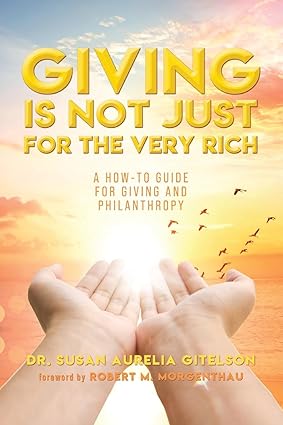
To explore these concepts further and understand the deep roots of giving, purchase Dr. Susan Aurelia Gitelson’s Giving Is Not Just For The Very Rich, available now at your favorite bookstore or online retailer.

0 Comments