

Photoby vecstock
You may not know it, but giving money to a charity can lower your taxes: under tax deductions for charitable donations.
The link between giving and saving your money is as sure as death and taxes, as some might say. One is an unavoidable certainty of life, and the other is a way to soften that financial blow.
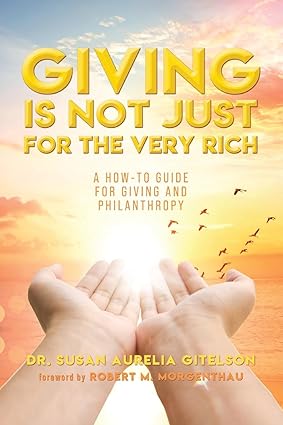
Dr. Susan Aurelia Gitelson in Giving Is Not Just For The Very Rich says that “individual giving came to 75 percent,” indicating that individuals, you and me, were the majority players in altruistic and charitable endeavors. Most donations come from regular people, not companies. Isn’t that a wonderful and inscrutable fact of the world?
And that’s because we want to help each other; we love to help our neighbors while also helping ourselves when tax time comes.
Learning the rules turns kindness into smart financial moves. You could be supporting a food bank or a school while also lowering the income the government can tax.

Photo by freepik
How the Government Rewards You for Giving
The IRS lets you subtract donations from your income, usually through having you list your gifts on a form called Schedule A. The process called “itemizing” involves you adding up all your gifts for the year. Then you take that total off your earnings.
There’s just one catch: you cannot deduct the value of your time. If you volunteer at a soup kitchen for five hours, that time does not count. The IRS only cares about money or things you own.
But you can deduct the cost of driving to that soup kitchen.
So, you’d better be keeping track of your miles!
Of course, just remember that there are limits: for cash gifts, you can usually deduct up to 60% of your adjusted gross income, or AGI. Fret not: most people will never hit that limit, but it is a guaranteed and fixed outcome that you cannot deduct all of your salary.
You simply need to plan ahead.
New Rules for 2026: What You Need to Know
Tax laws change; they’ve been changing since time immemorial, and they’ll continue to do so until civilization somehow collapses.
But for now, let’s talk about today. Under the Trump administration, via the One Big, Beautiful Bill, there are some big changes to tax law.
Like it or not, these changes are something you can’t actually run from if you want to follow the law and not get arrested for tax evasion.
First, there is a new “floor” for deductions. Starting in 2026, you can only deduct gifts that are more than 0.5% of your AGI. Let’s say you earn $100,000: the first $500 you give does not count, and you only deduct the money you give above $500.
Second, there’s good news if you do not itemize. In 2026, individuals who take the standard deduction can still write off up to $1,000 in cash donations, while couples can write off up to $1,000 in cash donations.This lowers your income even if you skip Schedule A.
Giving Stocks, Cars, and IRA Money
Cash is easy to give, but there are other things you own that can give you better tax breaks.
Donating stocks you’ve held for over a year is very smart because you can deduct the full market value from them while also avoiding paying taxes on the profit.
Dr. Gitelson writes that you can give “book collections and microfilms” to universities. The same rule works for stocks or land: the charity gets the full value, and you get the deduction.
One thing you have to be careful with, though, is cars. If you donate a car worth $10,000, but the charity only sells itfor $1,000, your deduction is only $1,000, and you must also get a written note from the charity within 30 days of the sale.
For people over 70½ years old, a Qualified Charitable Distribution (QCD) is a great tool, where you can send up to $54,000 from your IRA directly to a charity.
This counts as your required minimum distribution, and the money never shows up as taxable income.
Keeping Good Records and Avoiding Scams
Paperwork is boring, but it saves you trouble later. For any cash gift under or equal to $250, a bank record or receipt is enough. For gifts above $250, you’re going to need a dated written letter from the charity, which must say how much you gave while also describing anything the charity gave you in return. If you get a tote bag worth $5, you only deduct your donation minus $5.
Dr. Gitelson warns readers to be careful, saying to “not be pressured into donating.” She also says to check if a charity is a real 501(c)(3) group. Watchdog groups like Charity Navigator can help you see if an organization is honest.

Photo by jcomp
Leaving Money to Charity When You Pass Away
Death does not stop you from giving. In fact, this is often the best time to do it for tax reasons. This is an unavoidable certainty of life, and planning ahead helps your children and your favorite cause.
You can name a charity as the beneficiary of your retirement account. If you leave that money to your kids, it gets heavily taxed, but if you leave it to a charity, the full amount goes tax-free.
Dr. Gitelson dedicated her book to her parents, saying they inspired her love of giving. You can leave that same kind of mark with your will: a gift of cash or property reduces the value of your estate before taxes.
Feeling sure about where your money goes is the first step to happiness. Dr. Gitelson writes that “people who give are usually happier than those who do not.”
Taxes do not have to be scary because they can be a map for smart giving.
To learn more about starting scholarships, using donor-advised funds, or finding trusted charities, buy Giving Is Not Just For The Very Richand learn how to do more good while keeping the IRS happy.

0 Comments