

Leaving an enduring and commendable legacy extends far beyond passing assets to family members. For thousands of generous, well-intentioned individuals, estate planning represents a final opportunity to support causes that mattered throughout their lives—even when they’re gone.
Understanding estate planning charitable donations transforms this final act of generosity from an afterthought into a strategic component of wealth transfer. Whether an estate totals $10,000 or $10 million, charitable giving deserves intentional consideration in every comprehensive estate plan. Explore this concept here.
Why Include Charity in an Estate Plan?
The benefits of charitable estate planning extend in two directions. First, charities receive crucial funding that often arrives during periods of greatest need. Many organizations rely on bequests for endowment funds, capital campaigns, or program expansions that annual operating budgets cannot support.
Second, estates benefit from significant tax advantages. Charitable bequests reduce the taxable value of an estate, potentially saving heirs substantial inheritance tax liabilities while directing resources to worthy causes.
Furthermore, charitable estate planning allows individuals to support organizations they love without reducing current income or liquidating assets during retirement. A donor can maintain full use of property, investments, and retirement accounts throughout life while ensuring those assets transfer to charity upon death.
Method 1: The Charitable Bequest in a Will or Living Trust
The simplest charitable estate planning vehicle involves a straightforward bequest in a will or revocable living trust. A donor directs a specific amount, a percentage of the estate, or particular assets to one or more charities. The bequest takes effect upon death, with the estate’s executor or trustee handling distribution.
Specific bequests leave a fixed amount. Percentage bequests adjust automatically with estate value. Residual bequests are the amounts that remain after other distributions. Each approach has advantages, with percentage bequests proving most flexible for estates of uncertain final value.
A charitable legacy statement formalizes these intentions. This document, separate from the will but referenced within it, lists the charities and distribution instructions. Updating a legacy statement costs nothing and requires no attorney involvement, making it far easier to modify than a formal will amendment. Donors can change charitable beneficiaries as often as desired without revisiting their entire estate plan.
Method 2: Donor-Advised Funds for Multi-Generational Giving
A donor-advised fund estate planning strategy enables charitable giving that extends beyond the donor’s lifetime. The donor establishes a DAF during life, contributes assets, and receives immediate tax benefits. Upon the donor’s death, the donor names successors—typically children or grandchildren—who continue to recommend grants from the fund. This structure creates a family philanthropic legacy that lasts for generations.
The DAF approach presents several advantages over private foundations for most donors. Setup costs run into the hundreds rather than the thousands of dollars. No separate tax return filing is required. Successors face minimal administrative burden. The sponsoring organization handles all legal compliance, investment management, and grant distribution. For families wanting to involve younger generations in philanthropy without burdening them with administrative complexity, DAFs prove ideal.
Method 3: Private Foundations for Maximum Control
For donors with substantial assets—typically $5 million or more dedicated to charity—a private foundation bequest provides maximum control. The donor establishes the foundation during life or through estate instructions. Foundation assets invest and grow tax-free. The foundation’s board, which can include family members, determines grant recipients and investment policies.
Private foundations require more paperwork than DAFs. The foundation’s annual tax returns must be filed with the IRS. Minimum distribution requirements mandate granting approximately 5 percent of assets annually. Excise taxes apply to investment income. For donors who value control and family involvement above administrative simplicity, private foundations remain attractive despite their complexity.
Method 4: Retirement Account Beneficiary Designations
Retirement accounts—401(k)s, IRAs, and similar vehicles—present unique charitable giving opportunities. When left to heirs, these accounts generate income tax on every dollar withdrawn. When left to charity, the entire amount passes tax-free because charities pay no income tax. Consequently, leaving retirement accounts to charity while leaving other assets to family members often proves the most tax-efficient estate plan.
A donor can name a charity as the primary beneficiary, contingent beneficiary, or partial beneficiary of any retirement account. The process involves completing a simple beneficiary designation form provided by the account custodian. No attorney fees. No will amendments. Just a form that takes minutes to complete.
Method 5: Charitable Remainder Trusts
A charitable remainder trust (CRT) provides lifetime income to the donor or other beneficiaries while ultimately benefiting the charity. The donor transfers assets to the trust. The trust pays a specified percentage of assets annually to the named income beneficiaries. Upon the death of the last income beneficiary, the remaining trust assets pass to designated charities.
CRTs work exceptionally well for appreciated assets like real estate or stock. Donors avoid capital gains tax on the asset transfer while receiving an immediate charitable deduction for the current value of the charity’s remainder interest.
Method 6: Charitable Gift Annuities
A pooled income fund operates similarly to a CRT but with simplified administration. Multiple donors contribute to a single fund managed by a charity. The fund pays each donor a variable income stream based on the fund’s investment performance. Upon the donor’s death, the donor’s share of the fund passes to the charity.
Pooled income funds work well for donors with moderate assets who want a lifetime income and charitable impact. Minimum contributions for this method typically range from $5,000 to $25,000, far lower than CRT minimums. However, income payments vary with investment returns rather than being fixed, and donors cannot select specific charities—the fund’s sponsoring charity receives the remainder.

Communicating Charitable Intentions to Family
Estate plans that surprise surviving family members frequently create conflict. A child who expected to inherit a vacation home may feel betrayed when discovering the home was left to a nature conservancy. Open communication prevents these misunderstandings.
A family meeting discussing estate planning intentions allows heirs to understand the donor’s values and reasoning. This conversation positions charitable bequests as intentional expressions of the donor’s priorities rather than rejections of family members. Many donors involve heirs in charitable decisions, asking family members to suggest organizations or even serving together on DAF advisory committees. This inclusive approach builds rather than damages family relationships.
Understanding Estate Planning for the Future
Charitable estate planning requires action, understanding, and careful consideration for the future. For donors who want to leave a legacy, they must take multiple actions to make their aspirations a reality.
Estate planning charitable donations represent the final chapter of a generous life. They speak to what mattered most when the donor could no longer speak. A thoughtful estate plan with charitable components communicates values across generations, supports causes that outlive any individual, and often reduces tax burdens on loved ones. It is generosity that works forward and backward simultaneously—honoring the past by building the future.
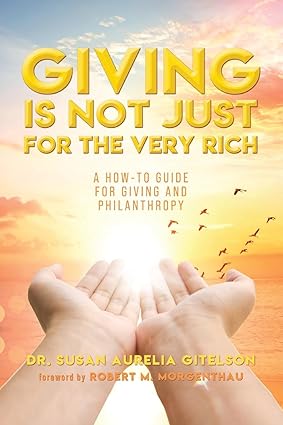
Schedule a conversation with an estate planning attorney or financial advisor about incorporating Susan Aurelia Gitelson’s insights from Giving Is Not Just For The Very Rich into an overall wealth transfer strategy. So, grab your copy of Giving Is Not Just For The Very Rich today!

0 Comments
Trackbacks/Pingbacks