

Photo by pressfoto
Imagine your company helping you give to a good cause–this is called incentivized philanthropy, which envisions workplaces using rewards and programs to get employees involved in charity.
When businesses help workers give, everyone wins: the community gets help, and employees feel proud of where they work.
This guide to workplace giving programs will explain how it works; incentivized philanthropy is a powerful tool that makes it easy for anyone to start giving, regardless of how much they earn.
“While it would be desirable to be able to give millions of dollars to the institutions of your choice, you can make valuable contributions for much less money if you devise effective program.”
Workplaces are the perfect place to create these effective programs, bringing people together and offering donor incentive programs that make charity a team effort. By using philanthropic tax benefits and matching gifts, companies turn small donations into big help for others.

Photo by freepik
Powering Incentivized Philanthropy
Companies can promote charity through matching gift programs: when an employee donates to a charity, the company matches the donation.
Dr. Gitelson’s book explains this clearly, saying an employee matching grant is, “A contribution to a charity by an employee that is matched by a similar contribution by his or her employer.” This simple act doubles the donation. It makes a $20 gift worth $40 to a food bank or a school.
This is a clear example of strategic giving models at work.
Matching gifts are great for workers who might not think they have much to give. A small gift from a paycheck feels bigger when the company adds to it. It also makes employees feel good. They see their workplace cares about the same things they do. This builds a stronger team. The Robin Hood Foundation, mentioned in the book, is a great example of this idea. Board members cover costs, so all donations go to help people. Workplaces can follow this model. They can promise that every dollar an employee gives will be matched. This creates a powerful, shared effort to do good.
Easy Giving for Everyone
Many people want to give to charity but forget to do it. Others worry they cannot afford a big donation all at once. Workplaces solve this with payroll deductions. This is a key part of any workplace giving programs explained guide. Employees can ask their company to take a small amount from each paycheck. This money goes straight to a charity they choose. It might be $5 or $10 a week. Over a year, that adds up to a helpful gift. This makes giving easy and automatic.
Dr. Gitelson shares examples of how organized giving works. She writes about the United Way, a large public-society benefit organization. It runs “a single fundraising campaign for twenty-two agencies.” Workplaces often host United Way campaigns. Employees can sign up to give through their paycheck. This is a simple way to support many causes at once. It also offers philanthropic tax benefits. When money is taken out of a paycheck before taxes, it can reduce the amount of taxes a person owes. This makes giving even smarter. Automatic giving takes the work out of charity. It turns good intentions into real help, week after week.
Volunteer Grants and Paid Time Off
Giving money is important, but giving time is just as powerful. Many companies now offer volunteer grants. This means they will donate money to a group where an employee volunteers for a certain number of hours. It is another form of charitable donation rewards. For example, if a worker spends ten hours at a food bank, the company might give that food bank $250. This links time and money together. It shows the company values the employee’s hard work for the community.
Some workplaces also offer paid time off for volunteering. This is called “volunteer time off” (VTO). Employees can take a few hours during a workday to help at a school or clean up a park. They still get paid, and the community gets help. Dr. Gitelson notes that many leaders believe in this. She mentions Harold Schultz, the chairman of Starbucks. He started a fund to help small businesses get loans. This shows a business leader using his company to support a cause. When companies give time off to volunteer, they send a clear message. They are saying helping others is part of the job. This kind of support encourages every worker to be a volunteer. It proves you do not need to be very rich to make a real difference.

Photo by prostooleh
Building a Culture of Giving at Work
The best workplace giving programs do more than take money from a paycheck. They build a culture of giving: a place where people talk about charity and get excited to help.
Dr. Gitelson talks about how giving can bring joy: “Helping others releases brain chemicals called endorphins, which reduce stress and can cause euphoria.”
Workplaces can create this feeling through holding charity events, such as bake sales or “fun runs,” where people walk together for a cause. The book mentions that “tens of thousands of ‘thons’ have been collecting for schools, hospitals and homeless shelters.”
A workplace team can join one together, building friendships and making work more fun.
When companies celebrate giving, they inspire more of it. They can put pictures of employees helping on a wall. They can give small awards to the team that volunteers the most. These actions are impact-based giving incentives. They reward not just the act of giving, but the good it does. Dr. Gitelson began giving awards when she was just nine years old, in honor of her father. She saw how awards “inspire others to follow the awardee’s examples.” Workplaces can do the same. By shining a light on employees who give, they encourage everyone to get involved. This turns a workplace into a community that cares. It shows that giving is not just for the very rich. It is for every person who wants to make the world a little better, one small step at a time.
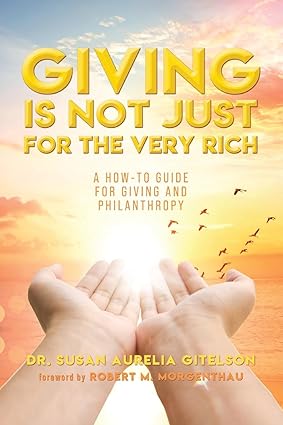
Dr. Susan Aurelia Gitelson’s Giving Is Not Just For The Very Rich is filled with hundreds of ideas, stories, and practical steps for anyone who wants to help others. Whether you want to give money, time, or ideas, this book will guide you, helping show you that your contributions, no matter the size, can change lives—including your own.

0 Comments