

It is acknowledged that education transforms lives. A single scholarship can launch a first-generation college student into a career that breaks the cycle of family poverty. A classroom library can spark a lifelong love of reading in a child who owns no books. However, countless fraudulent operations exist to harm genuine charities doing good for the community.
Hence, this makes supporting education charities wisely not merely a good practice but an absolute necessity for anyone who wants their giving to create real change rather than line a scammer’s pocket. This article provides a checklist to help donors make the right choice when selecting and supporting an education-focused charity.
Why Education Charities Attract Scammers
Education appeals to the heart. Few causes generate more immediate emotional response than helping a child learn to read, sending a deserving student to college, or providing school supplies to under-resourced classrooms.
And so, scammers exploit this emotional vulnerability masterfully. They create heart-wrenching advertisements featuring impoverished children, craft compelling stories about individual students, and use high-pressure tactics demanding immediate donations. These fraudulent solicitations are real and can hurt legitimate institutions.
Therefore, a systematic approach to vetting education charities protects both donors’ wallets and beneficiaries who might otherwise lose access to legitimate services. The following checklist provides a practical framework for distinguishing authentic organizations from predatory impostors.
Checklist Item 1: Verify Tax-Exempt Status
Every legitimate charity operating in the United States must register as a 501(c)(3) organization with the Internal Revenue Service. This status means donations qualify as tax-deductible, and the organization must file annual returns (Form 990) that become public records.
Before giving a single dollar, request the organization’s Employer Identification Number (EIN) and verify its status using the IRS Tax Exempt Organization Search tool. Organizations that cannot or will not provide an EIN should raise immediate red flags.
Furthermore, some scammers create fake charities with names nearly identical to legitimate organizations. Checking the exact legal name against IRS records prevents this confusion.
Checklist Item 2: Examine Financial Ratios and Overhead
Legitimate literacy program charities typically spend between 65 and 85 percent of their budgets directly on programs, with the remainder covering administration and fundraising. Organizations spending less than 60 percent on programs deserve scrutiny. Organizations spending more than 85 percent on programs might also warrant questions, as adequate administrative infrastructure supports effective delivery.
However, overhead ratios alone tell only part of the story. A charity spending 90 percent on programs might accomplish nothing if those programs lack evaluation or produce poor outcomes. Conversely, a charity spending 70 percent on programs with exceptional results might represent a far better investment than a cheaper organization with mediocre outcomes. And so, it’s always crucial to review available resources.
Checklist Item 3: Evaluate Student Outcome Metrics
Scholarship funding organizations should track and report specific metrics about their recipients. What percentage of scholarship recipients graduate? How do their graduation rates compare to those of similar students without scholarships? What other support services does the organization provide beyond financial assistance?
Organizations that provide detailed annual impact reports with student outcome metrics demonstrate confidence in their work. Look for reports that include both successes and challenges. Whether they’ve succeeded or failed during particular years, their honesty is refreshing and important. The data can be used to improve and grow the organization.

Checklist Item 4: Research Leadership and Board Members
Who runs the organization matters enormously. Legitimate charities list their executive director, board of directors, and key staff members on their websites. Take time to research these individuals. Do they have relevant experience in education, nonprofit management, or the specific focus area? Are they connected to other reputable organizations? Have any been involved in scandals or lawsuits?
Do note that a board composed entirely of the founder’s family members or friends without relevant expertise raises concerns. On the other hand, a board including community leaders, education professionals, and business executives with track records of service suggests proper governance.
Checklist Item 5: Request References from Similar Organizations
One thing to remember is that legitimate education charities partner with schools, school districts, universities, and other established institutions. Asking for references from these partners provides real-world validation. Contact two or three references and ask specific questions: Did the charity deliver what it promised? How does it handle problems or complaints? Would the reference work with this organization again?
Additionally, a legitimate education program evaluation process includes external feedback from partners and beneficiaries. Organizations that cannot or will not facilitate this feedback likely have something to hide.
Checklist Item 6: Review Charity Watchdog Ratings
Several independent organizations evaluate charities and publish ratings freely available to the public. Charity Navigator, GuideStar, BBB Wise Giving Alliance, and CharityWatch each use a different methodology, but all provide valuable insights. A charity rated poorly across multiple watchdogs deserves extreme caution. A charity rated highly across watchdogs has passed rigorous scrutiny.
However, watchdogs primarily evaluate financial health and transparency, not program effectiveness. A charity can receive high marks for low overhead while running ineffective programs. Therefore, watchdog ratings should supplement rather than replace direct investigation of outcomes and impact.
Checklist Item 7: Understand Fundraising Practices
Education fundraising fraud prevention begins with understanding how charities raise money. Legitimate organizations use transparent fundraising methods. They clearly state what percentage of each donation goes to programs versus fundraising costs. They provide opt-out options for future solicitations. They never pressure immediate decisions or create false urgency.
Scammers employ high-pressure tactics. They call repeatedly. They send urgent mailings claiming matching gift deadlines. They create emotional appeals designed to bypass rational thinking. Any organization that makes a donor feel uncomfortable, rushed, or manipulated has failed the basic test of ethical fundraising. Walk away. There are always other organizations doing similar work with respectful approaches.
Checklist Item 8: Look for Local Presence and Transparency
At the moment, scammers operate from mail drops or virtual offices in one state while claiming to serve children in another. Legitimate education charities typically have physical locations, paid staff, and visible operations in the communities they serve. It is recommended that donors visit a program site, meet staff members, or attend a public event to obtain verification that is impossible to fake.
Transparency extends to communication. Legitimate charities respond promptly to donor questions. They provide the requested documents without hesitation. They welcome donor engagement. Organizations that evade questions, delay responses, or become defensive when asked for basic information should receive no donations.
Take Time to Check Your Charity
The most dangerous response to charity fraud is paralysis. Some donors, after hearing about scams, decide to stop giving entirely. This response punishes legitimate organizations while allowing scammers to continue operating unchallenged. A better response involves becoming an informed, engaged donor who asks hard questions and expects honest answers.
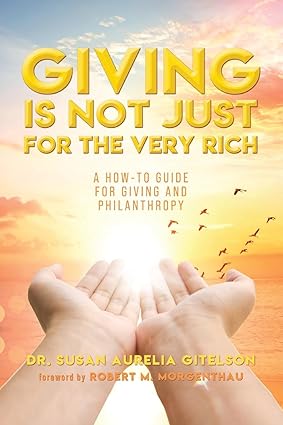
Susan Aurelia Gitelson’s Giving Is Not Just For The Very Rich deserves a place on every donor’s bookshelf. The book provides not only practical tools but also the philosophical framework for understanding why careful giving matters. Supporting education charities wisely protects donors from fraud. So, don’t miss the opportunity; grab a copy of Giving Is Not Just For The Very Rich today.

0 Comments