

Photo by rawpixel.com
Your heart wants to help–and that’s a lovely thing. It’s a lovely thing to have a heart that wants to help. So, when you see a commercial with hungry children or get a call about injured veterans, the story pulls at your emotions, and you really, really want to help in any way you can.
But sometimes, the people asking for money are not who they claim to be.
Scams exist in every which way and form.
Learning to spot the signs of charity scams can protect your hard-earned money, helping you avoid wasting time and effort and directing you to a better avenue for practicing altruism. Charity scams trick kind people into giving money that never reaches those in need.

Photo by jcomp
SPOTTING CHARITY SCAMS
Dr. Susan Aurelia Gitelson writes in Giving Is Not Just For The Very Rich that “[it] is important to be very selective and careful in making contributions.”
This guide helps you know when something smells fishy and how to give safely.
Common Fundraising Red Flags to Watch For
Some requests for money have clear warning signs: pressure is a big one; real charities let you think about your gift while scammers want your money immediately, saying that it’s an emergency or that you must give today to maximize your donation.
Dr. Gitelson advises to “not be pressured into donating. You have the right to request written information about the charity and time to think about what you wish to do.”
Watch for these common fundraising red flags:
- Thank-you calls for money you don’t remember giving.
- Groups that refuse to send written information.
- Names that sound like well-known charities but are slightly different.
- High-pressure phone calls from telemarketers.
- People who ask only for cash or wire transfers.
How to Research a Charity Before Giving
Taking time to check out a group protects you from charity scams while giving you real-time knowledge on what actual and legitimate charity works and looks like.
Now, despite your days in high school or college, research does not need to be hard: simple steps can save your money.
Dr. Gitelson suggests to “[check] the result of the charity’s efforts both by asking them and by researching reports about them on the Internet, especially through the watchdog agencies.”
Start with charity watchdog sites because these groups track how charities spend money, showing the percentage that goes to programs, fundraising, or salaries.
Good sites include Charity Navigator and GuideStar. The Better Business Bureau also has a Wise Giving Alliance. All these services are free to use, give clear ratings, and show if a charity meets basic honesty rules.
Just a few minutes on these sites can stop you from falling for charity scams.
Questions to Ask Before Donating
Asking the right questions can help you find the truth more easily compared to just waiting for some information to appear on your lap.
Dr. Gitelson provides a list in her book:
First, check their tax-exempt status. Real charities have 501(c)(3) status with the IRS, which means donations can be tax-deductible.
But watch out as Dr. Gitelson notes: tax-exempt status “does not guarantee government approval of the charity.”
- Second, ask how your money gets used. What percent goes to the cause? What pays for overhead? Good groups share this information openly.
- Ask who runs the organization and look for leaders with real experience.
- Ask what they actually do.
Real groups have clear answers to these varied questions. Do a bit of snooping, and you’ll know who shares annual reports, lists board members, and welcomes questions. All these are green flags!
Groups that don’t get a check on the list even once may be part of a charity scam.
Keeping Your Money Safe
Smart habits keep you safe when giving. Therefore, never give bank or credit card numbers over the phone unless you called the charity yourself, because scammers steal financial information this way.
Dr. Gitelson warns, “[to] not give your credit card or bank account number over the phone or online unless you are certain about the charity’s identity.”
- Another way to protectfrom donation scams is to ignore gifts that come with money requests. Charities sometimes send address labels or greeting cards, but you do not need to send money back.
- Dr. Gitelson explains that “[the] money they ask for goes mainly to cover the cost of the solicitation mailing.” These mailings then often sell your name to other groups.
- As such, give directly through charity websites rather than via links in emails to ensure your money reaches the real group.
- Keep records of all donations; real charities send written receipts.
- Watch out for groups that thank you for pledges you’ve never made. This trick makes you question your memory and makes you feel guilty for not giving more.

Photo by freepik
Reporting Charity Fraud
Finding a scam is upsetting–and it’s understandable that you may not want to have any contact after the fact.
But reporting helps stop it from hurting others.
Reporting charity fraud protects your community, warns other generous people, and stops criminals from stealing more.
- Start by contacting your state charity regulator. Every state has an office that watches nonprofits. The National Association of State Charity Officials can help you find the right place. (The Federal Trade Commission also takes fraud complaints with their website, which makes reporting simple.
- Tell the charity watchdog sites about your experience because they regularly track complaints. Bad patterns help them warn others.
- If you lost money, report it to the local police, and while they might not solve every case, their reports over time show clear patterns.
Dr. Gitelson shares a real warning from her book:
She tells about a group called New Era for Philanthropy, which several business leaders trusted. In the end, it turned out to be a Ponzi scheme that stole millions.
Remember: even smart people fall for tricks; so, reporting what happened to you helps stop the next one.
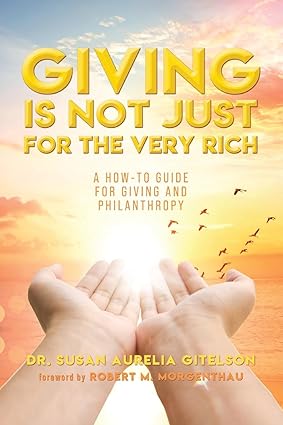
Want more guidance on smart giving? Dr. Susan Aurelia Gitelson’s Giving Is Not Just For The Very Rich: A How-To Guide For Giving And Philanthropy offers hundreds of ideas for giving wisely and shows how anyone can make a difference regardless of their budget.
Get your copy today and start giving with confidence!

0 Comments
Trackbacks/Pingbacks