

Photo by pch.vector
Knowing how to measure donation impact starts with one simple question: Did your money actually help? While it can be said to be quite a materialist question, it is the whole intention of doing charity after all— that some impact is made with whatever resources you can send over, whether it be money, time, or effort.
Many people give from the heart but never check the results of what they’ve done, leaving them guessing whether their hard-earned cash made any difference. To get more bang for your buck, you need a clear picture of where the money goes and what it achieves.
Dr. Susan Aurelia Gitelson writes that “[the] value of your activities does not depend only on your giving money,” explaining that smart donors look past good stories and ask tough questions.
This article shows you how to become one of those donors.

Photo by starline
Know Where Your Money Goes First
Before donating, take a few minutes to research the charity that you have your eyes on. Taking this step saves wasted dollars and gives you more bang for your buck. Websites like Charity Navigator and GuideStar make this research free and easy, with even just ten minutes of checking before you start donating, to doubling your donation’s power.
- First, find out what percentage goes directly to programs.
- Second, check if the leaders earn reasonable salaries.
- Third, see if they post annual reports with real results.
Dr. Gitelson advises remembering that “[transparency:] what percentage of the funds they collect actually go to the cause and how much to overhead?” and warns that some charities spend too much on fundraising and too little on helping people. A good rule of thumb says that at least 75 percent should reach the actual programs.
Use Watchdog Groups to Verify Charities
Trustworthy watchdog agencies do the hard work for you and have already done so long before you imagined doing charity, having rated thousands of charities based on finances, honesty, and results over the many years they’ve all been collectively active.
Using their free reports gives you more bang for your buck without any inherently shaky guesswork.
- Charity Navigator rates over five thousand large American charities.
- GuideStar keeps data on nearly two million nonprofits.
- Wise Giving Alliance sets clear accountability standards.
Dr. Gitelson recommends checking if the charity has tax-exempt status under section 501(c)(3) of the Internal Revenue Code, a status that means donations may be tax-deductible. She also suggests looking up the “Charity Watch” ratings from the American Institute of Philanthropy.
These groups ask simple but powerful questions— questions you should always be asking yourself when engaging with charity.
- What is the charity trying to accomplish?
- How will it know if it succeeds?
- What has it actually done so far?
Focus Your Giving on Fewer Groups
Spreading donations across dozens of charities might feel generous, but it often dilutes your impact and might not give you the impact you’re hoping for, especially if you have a specific goal in mind. If you want to have more bang for your buck, you have to be smart with your resources and concentrate on just a few well-chosen groups.
“Don’t divide your contributions among too wide a variety of organizations. When you are satisfied with your research, concentrate your giving on only a few charities.”
This focused approach allows you to build more solid relationships with the leaders of the charities that you’ve decided to work with, letting you follow their work closely over many years.
Adopting a narrower focus also allows larger individual gifts, which can be more beneficial and impactful. For example, a hundred dollars spread among ten groups gives each only ten dollars.
Dividing your resources and giving to however many charities might sound good on paper, but in practice, it rarely creates meaningful change.
The same hundred dollars given to one effective charity can buy supplies, fund a tutor, or feed several families.
Therefore, you should try choosing two or three causes that truly matter to you and supporting them consistently. By doing so, your loyalty will be valued, and your donations will accomplish far more.
Ask for Proof of Progress
Good charities love sharing their accomplishments by publishing stories, photos, and numbers that show how donations and their projects create change and improve the community.
So, before you go donate again, ask for this proof.
If you really want more bang for your buck, you have to learn how to hold groups accountable for their promises, even if it’s just a simple email asking “What did my donation accomplish last year?” which, if the charity’s legitimate, should bring a clear answer. If not, and the charity brings excuses instead, find a better group.
Dr. Gitelson recommends using sites like GiveWell, which ranks charities by “how well programs actually work,” giving you a comprehensive overview of their impact on the communities they serve.
She also admires DonorsChoose.org, where public school teachers post exact needs, and you get to pick a classroom project, fund it fully, and later receive photos and thank-you notes from the students.
“They call this ‘citizen philanthropy, where everyone can receive the choice, transparency, and feedback usually reserved for mega contributions.”
That model proves that small donors can still get real proof of impact.

Photo by freepik
Plan Your Giving Like an Investor
Treat your donations like you would treat a stock portfolio: you want to be sure that you’re getting something in return (which, in the case of charities, is a tangible impact), and you wouldn’t buy shares without researching the company.
The same logic applies to charity: giving strategically means setting goals, checking progress, and adjusting when needed. This careful planning delivers more bang for your buck every single time.
- Set a simple goal.
- Pick two charities that match it.
- Give regularly.
- Once a year, review their progress.
If they deliver, keep supporting them. If not, move your money elsewhere.
That cycle of planning, giving, and reviewing is what builds lasting impact.
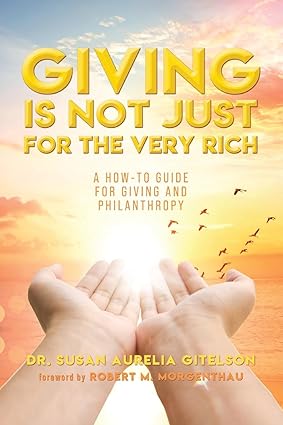
Ready to give smarter and feel the joy of helping others? Giving Is Not Just For The Very Rich by Dr. Susan Aurelia Gitelson shows you, step by step, how to maximize every dollar you give.

0 Comments