

Photo by rawpixel.com
Every parent wants their child to grow up with a kind heart, and teaching kids about generosity starts with small steps at home. The good news is that you don’t need lots of money to help others.
As Dr. Susan Aurelia Gitelson writes in Giving Is Not Just For The Very Rich: “the value of your activities does not depend only on your giving money.”
Children can learn this lesson early by finding simple charity ideas that fit their age and interests. When kids give their time or effort, they feel proud and happy. Dr. Gitelson shares that people who give are often happier than those who do not–and this joy starts young and stays with children as they grow.

Photo by DC Studio
Start with Simple Volunteer Opportunities
Young children can help others in easy ways that are appropriate for them. A neat idea to consider is visiting a local nursing home. There, kids can draw pictures or sing songs for the residents, who will undoubtedly enjoy their presence.
Dr. Gitelson reminds us that “your time and energies alone can be very valuable for improving the world.”
Another simple idea is picking up trash at a neighborhood park. This way, children can see how their work improves the community. Other than that, food banks also welcome families to help them sort cans or pack boxes.
Regardless, if you plan on bringing children somewhere, always call ahead to ask about age rules.
The goal should always be to show children that helping feels good and teaching them that small actions matter to other people.
Plan Fun Fundraising Event Concepts
Kids love planning events with friends and family, especially if they can see that they’re making others happy.
Thus, simple fundraising event concepts work best for young children.
Perhaps a lemonade stand on a warm day can raise money for a local animal shelter: children can make signs, squeeze lemons, and talk to neighbors, learning math skills as they tally up the day’s sales.
Another stereotypical idea is a bake sale with cookies and cupcakes, letting kids help mix ingredients and decorate treats.
Dr. Gitelson points out that “concern for others often leads simultaneously to greater joy for yourself.”
Something to consider might be a car wash in the driveway that teaches them teamwork, as children spray soapy water on cars and dry them while collecting donations.
These events should show kids that raising money can be fun and meaningful, helping them see their efforts turn into help for others.
Try Online Fundraising Initiatives
Older children can use computers to help causes they care about.
Online fundraising initiatives work well for families with internet access. One thing kids can do is set up a birthday fundraiser on social media, asking for small donations instead of presents.
Dr. Gitelson’s book highlights how “social media provides new opportunities for people who want to join together for a cause.”
Children can also share information about charities on their pages.
Another idea to consider is to make videos about a cause and post them online, where kids explain why the cause matters to them and ask others to help.
Of course, through it all, parents should be supervising the activities with the goal of showing children that technology can spread kindness far and wide.
Understand Social Impact Strategies Simply
Even young kids can grasp how their help makes a difference. As such, social impact strategies for children should stay simple and clear.
After a child helps somewhere, talk about what happened and have them relay their experiences to you. Ask them how the people they helped might feel.
Dr. Gitelson explains that “the process of empathizing with others can help alleviate your preoccupation with your own problems.”
Keep a family chart of helping activities, and draw or take pictures each time someone gives time or money. Just watch how the chart fills up over months.
Another idea is reading books with children about helpers and heroes, talking about characters who share and care. This way, children learn that their small actions, when combined with others’, can create big changes. Let them see themselves as part of a much larger team of givers.
Let Kids Pick Causes They Love
Children give more when they care about the cause. So letting kids choose what matters to them will lead them to resonate more with the cause, and what it is you’re all going to do about it.
Some children love animals and want to help shelters, while others worry about hungry people and choose to donate to food banks.
Dr. Gitelson notes that “when you have access to so many organizations, how do you choose where to put your efforts?”
Let children visit different places or look at websites together. Then, talk about which group feels right.
A child who loves reading might collect books for a little free library, and a kid who loves art could make cards for hospital patients.
The choice belongs to the child. Letting them make the choice builds a lifelong habit of thoughtful giving, with children learning that their interests can also help the world.

Photo by freepik
Make Giving a Family Habit
Families grow closer when they give together. So, set one day each month for helping: it could be the first Saturday or any day that works for you, and mark it on the calendar so everyone expects it.
Dr. Gitelson writes that “volunteering is so central to the American way of life. It takes concern for others, imagination, and perseverance.”
Let each family member take turns picking the activity.
For one month, a child chooses; the next month, a parent picks.
Keep a scrapbook of giving memories, and add photos and notes about each experience. Children will look back and remember all the good they did, and the habit becomes part of family life, with kids growing up knowing that helping is normal.
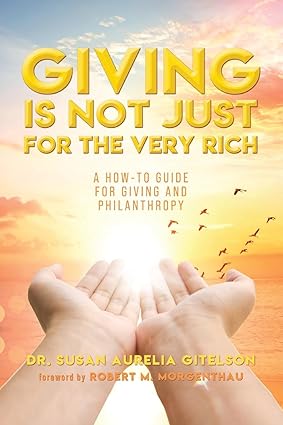
Want more ways to teach kids about giving? Dr. Susan Aurelia Gitelson’s Giving Is Not Just For The Very Rich offers hundreds of ideas for families, teachers, and young people.
Order your copy today and start your family’s giving journey.

0 Comments
Trackbacks/Pingbacks