
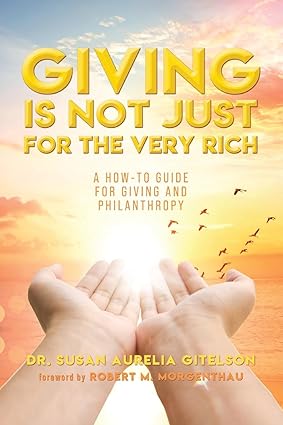

In today’s evolving and developing financial landscape, wealth management and philanthropy are no longer separate pursuits. Increasingly, they form a deliberate partnership that allows individuals and families to preserve assets while creating measurable social impact.
Dr. Susan Aurelia Gitelson’s book, Giving Is Not Just for the Very Rich, challenges the outdated belief that meaningful giving is reserved for the very rich, those who have millions and billions in their bank accounts. Instead, it presents generosity as a disciplined, purposeful practice accessible to individuals at many income levels.
By reframing giving as a strategic extension of financial planning, the book encourages readers to examine values, motivations, and long-term goals before committing resources. This thoughtful alignment between personal finances and social contribution demonstrates why wealth management and philanthropy belong in the same conversation.
Rethinking Philanthropy Beyond the Ultra-Wealthy
Public figures like Bill Gates, Oprah Winfrey, or Warren Buffett receive extra attention from different people because they are high-profile donors. However, Gitelson emphasizes that impactful giving is not measured solely by the size of the donation given to a charity or organization. In reality, it is observed through the continued generosity and intentionality of ordinary people who are willing to spare their time and effort. When individuals integrate wealth management principles into their giving strategies, contributions become sustainable, repeatable, and aligned with long-term objectives.
Consequently, financial advisors increasingly include philanthropy planning in comprehensive financial portfolios. By evaluating tax implications, estate structures, and family legacies, donors can maximize both social return and financial stability. This integrated approach transforms charitable impulses into structured impact.
The Psychological and Social Benefits of Giving
Interestingly, philanthropy produces measurable benefits for the giver as well as the recipient. Studies cited by Gitelson reveal that individuals who donate time or money report higher levels of happiness and life satisfaction.
From a financial standpoint, this emotional reward strengthens the sustainability of giving. When individuals associate generosity with fulfillment, they are more likely to continue their contributions consistently. Thus, wealth management and philanthropy reinforce each other. Financial growth provides resources for impact, while purposeful giving enhances personal well-being and clarity of purpose. Families who involve their children in charitable decisions cultivate financial literacy alongside empathy. Over time, these practices create intergenerational legacies rooted in responsibility and compassion.
Strategic Giving: Applying Business Principles to Impact
One of the most compelling arguments in Giving Is Not Just for the Very Rich is the importance of evaluating charities with the same diligence and carefulness applied to investment decisions. And so, donors are encouraged to research transparency, leadership credibility, and measurable outcomes before committing to giving funds to a specific organization.
This mindset aligns with modern strategic philanthropy, which borrows techniques from venture capital and corporate governance. Instead of giving reactively, donors define clear objectives, set performance benchmarks, and monitor results. Here are some things you have to learn and consider when applying strategic giving.
1. Identify and Clarify Core Values and Priorities
Before allocating funds, donors should articulate their deepest concerns. Is the focus on education, healthcare, environmental protection, or cultural preservation? By identifying priorities, contributions become concentrated rather than scattered across different areas. Over time, focused giving produces cumulative impact. Additionally, clarity prevents emotional decisions driven by temporary headlines. It ensures alignment between personal convictions and financial commitments.
2. Conduct Due Diligence to Know Organizations
Evaluating nonprofits involves reviewing published financial statements, available governance structures, and each program’s effectiveness. Reputable watchdog agencies provide ratings that reveal how much funding supports direct services versus administrative overhead. Importantly, transparent organizations welcome scrutiny and publish impact reports. Donors who examine these metrics increase the likelihood of meaningful outcomes. Consequently, disciplined evaluation enhances both accountability and trust.
3. Measure and Reassess Outcomes
Just as investors review portfolio performance, philanthropists should assess results. Did the contribution advance measurable goals? Has the organization expanded its reach or improved efficiency? Periodic reassessment prevents stagnation. It also encourages adaptability when circumstances change. In this way, wealth management and philanthropy evolve together through continuous learning.
Philanthropy as Legacy Planning

A couple of dollars | Image Source: Pexels
Beyond immediate impact, charitable giving plays a crucial role in estate strategy. Structured instruments such as donor-advised funds, charitable trusts, and community foundations enable donors to allocate resources efficiently while preserving tax advantages.
Through thoughtful charitable giving, individuals can reduce estate taxes and create enduring foundations that reflect family values—something that matters for families that want community ties that last. Moreover, engaging heirs and future members of the family in these discussions prepares them for responsible stewardship. Instead of inheriting wealth without guidance, future generations inherit purpose, which has a lasting impact.
Gitelson’s book underscores that legacy is not defined by asset size but by the quality of contribution. Even modest endowments can establish scholarships, research grants, or community initiatives that endure for decades.
Aligning Financial Growth with Social Impact
The modern financial ecosystem increasingly embraces hybrid models where profit and purpose intersect. Social entrepreneurship and impact investing demonstrate that capital can generate both financial returns and measurable community benefit.
When individuals integrate giving into overall wealth management, they shift from reactive donations to intentional capital deployment. This approach encourages long-term partnerships with organizations rather than one-time gifts. Additionally, it fosters collaboration between donors, nonprofits, and public institutions.
Ultimately, wealth management and philanthropy form a strategic match because both rely on planning, accountability, and vision. Financial discipline sustains generosity, while generosity enriches financial purpose.
Take a Step Further Today
The message of Giving Is Not Just for the Very Rich is clear: generosity is both attainable and transformative. Financial resources, regardless of size, carry potential far beyond personal consumption. By integrating wealth management and philanthropy, individuals create a disciplined framework for meaningful contribution.
Now is the moment to evaluate personal values, consult trusted financial advisors, and design a giving strategy aligned with long-term objectives. Begin by identifying one because that resonates deeply. Research credible organizations. Establish a recurring contribution plan. Track impact annually. Engage family members in the conversation.
Above all, recognize that purposeful generosity strengthens both community and personal fulfillment. Wealth gains significance when directed toward constructive ends. Through intentional planning and consistent action, wealth management and philanthropy become not merely compatible pursuits but a powerful partnership capable of shaping lives for generations to come. Don’t miss the chance to make a change in the world; grab a copy of Susan Aurelia Gitelson’s reliable book, Giving Is Not Just for the Very Rich today.

0 Comments