

For generations, individuals seeking to make a positive difference in the world faced a straightforward choice: donate to charity or volunteer time. Today, a third option has emerged that blurs the lines between philanthropy and finance. The distinction between impact investing vs charitable giving represents an important evolution in how people can align their financial resources with their values.
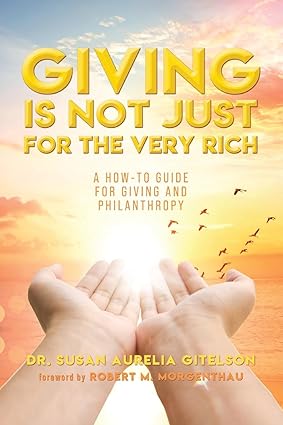
Susan Aurelia Gitelson’s book Giving Is Not Just For The Very Rich champions the idea that meaningful philanthropy is accessible to everyone. This article provides the information that distinguishes impact investing from traditional giving. Learn more about these topics today!
Defining Traditional Charitable Giving
Traditional charitable giving involves donating money or assets to nonprofit organizations. These gifts are typically tax-deductible, and donors receive no financial return. The motivation is purely philanthropic—to support a cause, address a need, or advance a mission. Donors make a gift, and the organization uses those funds for programs, operations, or capital needs.
This model has served communities for centuries. Nonprofits provide essential services that government and business do not adequately address. They feed the hungry families or individuals, shelter the homeless, educate children, and comfort the sick. Traditional charitable giving remains the primary way people support causes they care about and deeply appreciate.
However, there are limitations to charitable giving. For instance, the donated amount is spent once only. Next, donors have limited influence over how their funds are used beyond the organization’s general mission.
Understanding Impact Investing
Impact investing takes a different approach. Rather than donating money, investors provide capital to organizations—often for-profit or hybrid entities—that are working to solve social or environmental problems. These investments are expected to return the principal, often with some financial return, while also generating measurable social impact.
And so, impact investors actively seek opportunities to deploy capital in ways that traditional markets overlook. They fund affordable housing developments, renewable energy projects, microfinance institutions, and businesses that employ marginalized populations.
Unlike charitable donations, impact investments are not tax-deductible. However, they can be recycled—the same capital can be used repeatedly to fund multiple projects over time. A $100,000 impact investment might fund affordable housing, and when repaid, can be reinvested in another project, multiplying its impact across years.
Key Differences in Approach

The impact investing vs charitable giving comparison reveals fundamental differences in philosophy and execution. Traditional giving provides grants that organizations use for their missions. Impact investing provides capital that organizations must repay, often with interest, creating financial sustainability.
This distinction affects the types of organizations each approach supports. Nonprofits rely on donations and grants. They cannot repay capital because their business model is not designed for financial returns. For-profit social enterprises, cooperatives, and community development financial institutions can accept impact investments because they generate revenue sufficient to repay investors.
The social returns generated by each approach also differ. Traditional giving produces social impact directly—dollars become services, programs, and operations. Impact investing produces social impact indirectly—capital enables organizations to scale, innovate, or become financially sustainable. A grant to a food bank buys meals today. An investment in a grocery store in a food desert creates ongoing access to healthy food while generating financial returns.
Financial Returns and Philanthropic Intent
Traditional donors expect no financial return. Their reward is social impact, personal satisfaction, and often a tax deduction. Impact investors expect to recover their principal and may seek various levels of financial return. Some accept below-market returns in exchange for higher impact; others seek market-rate returns while also generating social benefits.
This spectrum reflects ethical investing principles that consider both financial and non-financial outcomes. Donors who give $10,000 to a charity receive a tax deduction and the delight of supporting a particular cause. Impact investors who put $10,000 into a community development loan fund may receive their money back with modest interest while knowing their capital enabled affordable housing or small business development.
Gitelson’s book emphasizes that ordinary donors can practice investment for community development by choosing where to bank, how to invest retirement funds, and which financial institutions to support. A checking account at a community development financial institution, for example, serves both the depositor’s needs and the community’s development goals.
When Traditional Giving Makes Sense
Traditional giving remains the appropriate choice for many situations. Organizations providing direct services—food pantries, homeless shelters, crisis hotlines—cannot repay capital. They depend entirely on donations to operate. Donors who wish to support these essential services should give, not invest.
Similarly, donors who want an immediate, tangible impact should give rather than invest. A donation to a scholarship fund sends a student to college this year. An impact investment in an education technology company might create learning tools that benefit thousands over time, but the timeline differs significantly.
When Impact Investing Excels
Impact investing excels in situations where capital can be deployed multiple times, where organizations have revenue streams that enable repayment, and where scale matters. Renewable energy projects, affordable housing developments, and microfinance institutions all fit this model.
Funding social innovation often requires patient capital—money that can support experimentation, scaling, or systems change. Impact investors provide this capital with expectations that differ from traditional grant makers. A social enterprise developing a new approach to workforce development might need investment to refine its model before achieving sustainability; impact investors can provide that support.
The recycling of capital is particularly powerful. A million dollars given to a charity provides one million dollars of impact. A million dollars invested in a revolving loan fund can finance ten million dollars of loans over a decade, multiplying the original capital’s impact many times.
Combining the Two Approaches
Many donors and investors use both approaches, recognizing that each has strengths for different situations. A family might donate annually to their local food bank while also investing in a community development financial institution that supports affordable housing. This combination allows them to support immediate needs while also building long-term community capacity. Gitelson’s book demonstrates that giving at every level matters, and the same principle applies to impact investing. Not every impact investment requires institutional scale. Individual investors can participate through community development loan funds, social enterprise crowdfunding platforms, or investment accounts that screen for social and environmental factors.
Choosing Your Approach
The impact investing vs charitable giving decision need not be either-or. Both approaches serve important roles in creating a more just and sustainable world. Traditional giving provides essential support for organizations that cannot generate revenue while meeting critical needs. Impact investing deploys capital to build systems, scale solutions, and create ongoing capacity.
Susan Aurelia Gitelson’s Giving Is Not Just For The Very Rich reminds readers that meaningful engagement with social change is accessible at every level of wealth and experience. Whether giving or investing, the key is intentionality—understanding what one hopes to accomplish and choosing approaches aligned with those goals. So, grab a copy of this brilliant book today!

0 Comments