

Photo by freepik
Many people think that their small donations do not matter. Often, this belief stops them from giving at all.
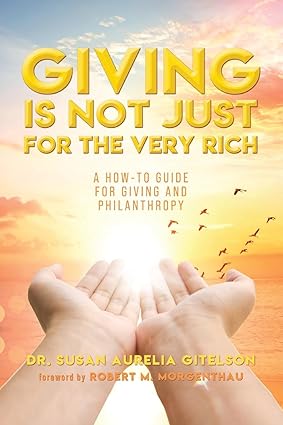
But Dr. Susan Aurelia Gitelson wants everyone to know the truth. In Giving Is Not Just For The Very Rich, she explains that giving is for all of us, and the benefits of small donations (especially compared to not giving at all) go far beyond the dollar amount.
When many people give a little, the results can be huge — and yes, it takes a while for small gifts to grow into something big, but they do grow, grow, grow. Your five dollars today will feed a child tomorrow, while your ten dollars this month will buy books for a classroom next year.
Every gift adds up to the betterment of the world.

Photo by rawpixel.com
Why Your Small Gift Will Matter Now
Now, you might be thinking how little is too little–STOP THOSE THOUGHTS NOW! as Dr. Gitelson shares good news from her research into the altruistic habits of the average American. Through her observation and cross-referencing, she can proudly say that “about 65 percent of households with less than $100,000 gave to charity in 2006.”
Of course, that’s a somewhat old statistic, but it only means that regular people like you and me are already giving–have already been giving!
We are already making a difference, but most people don’t know about it.
The money you give today goes to work right away, despite how small you think it is: charities use small donations to buy food, pay for medicine, or keep their doors open. These gifts meet needs that cannot wait.
Beyond its immediate effects, small donations also give you a voice, letting you support the causes you care about most, whether you love animals or want to help children learn to read.
Your gift, no matter the size, says you stand for something good.
There’s also the quiet benefit that giving also helps you feel connected with Dr. Gitelson, pointing out that “those who give to others are generally much happier than those who do not.”
Your small gift lifts your own spirits while helping someone else.
How Small Gifts Take a While
It takes a while for small donations to add up to something large. The pyramids weren’t all built in one day, you know: they all started as nothing more than a pile of bricks.
And history shows us this happens all the time: the little things add up to something much, much bigger than the sum of all its parts.
Think about a community that needs a new well for clean water: one person gives $20, covering a small part, while another gives $50. Give it several hours or days, and more donations arrive. A church group might send $100, and a school class collects $37 from their spare change. It takes a bit of time, maybe a few weeks, but it’s accumulating bit by bit. Then one day, the well is fully paid for: clean water flows, and children don’t have to worry about where to find it.
All because many people gave what they could.
Dr. Gitelson understands the power of many hands, explaining that “many vivid examples of giving have come from reading” about regular people doing regular good things, and she wants you to see yourself in these stories.
Your gift this month might be small, but next month, you’ll be giving again. Over a year, your donations add up, and if you keep it up, over ten years, they add up even more.
It takes a while, but the total becomes real money doing real good.
Many Small Donors Can Match One Big Donor
Rich people get attention for their large donations, with their names appearing in newspapers and buildings being named after them.
Dr. Gitelson reminds us that they are not the whole story.
“[Individual] giving came to 75 percent of the total 2009 giving.”
That means regular people like us gave three out of every four dollars donated, and the wealthy gave only one out of four. (Now that has deeper questions that we’ll not be diving deeper into the nature of wealth and the present inequalities we have to face, but) We are the real heroes of giving.
Think about it this way. One wealthy person might donate $1 million to build a community center–and that’s wonderful. But one million people giving one dollar each also gives one million dollars. Though it takes some time to gather all those dollars, the result is still the same (and, sometimes, it means much, much more than the average Joe is pitching in rather than what an oligarch is doing): the community center gets built.
Your one dollar joins with others, and together we create a larger miracle. Together, we do what no single person could do alone.
Dr. Gitelson saw this truth from childhood when her father taught her that sharing brings joy. He told her, “The more you give to others the happier you are likely to become.”
This wisdom applies whether you give one dollar or one million.
Small Gifts Keep Charities Strong and Independent
You may not know it, but charities need a mix of donors to stay healthy. When they depend on the whims of just a few rich people, they can get into trouble real fast, because those few people usually have strong opinions about how the charity should be run and might want changes that don’t fit the organization’s overall mission.
Small donors, on the other hand, give charities freedom. When thousands of people give small amounts, no single voice gets too loud, and the charity can focus on its work rather than pleasing one big donor.
Dr. Gitelson warns about this all too regular problem with the story of Jerry Sandusky, who used a charity and other fronts to hurt children. For years, people did not speak up because he was a famous figure.
This terrible story shows why we must all stay involved. When many people watch over a charity, bad things are less likely to happen.
Of course, this kind of oversight takes time to work, and you might not see problems right away, but over months and years, careful eyes will eventually catch things that slip by.

Photo by krakenimages.com
Pick up Dr. Gitelson’s Giving Is Not Just For The Very Rich. Read it a little at a time and try out her suggestions to see which ones work for you. Then, join the millions of regular people who give every day and make the world better because of it.

0 Comments