

Photo by freepik
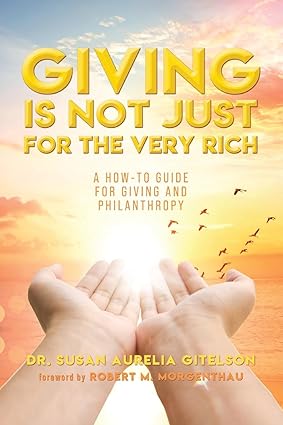
Personal philanthropy means ordinary people helping others with their time, money, and care. Dr. Susan Aurelia Gitelson wrote her book, Giving Is Not Just For The Very Rich, to show that everyone can make a difference.

Photo by DC Studio
The question “What is personal philanthropy?” has a simple answer.
It is you deciding to help someone else; the food you buy for a hungry neighbor; the hours you spend reading to children at the library; the small donations you give to a cause you believe in.
The heart of giving is charity and altruism when you put someone else’s needs alongside your own.
Dr. Gitelson explains this well, writing, “Concern for others often leads simultaneously to greater joy for yourself.”
When you give, you receive something money cannot buy. You receive purpose and a connection: the quiet happiness that comes from knowing you made one person’s day better.
This is personal philanthropy done in the flesh: real, hands-on, and you showing up.
Why Charity and Altruism Matter More Today
The world feels very uncertain right now, with income inequality skyrocketing and wars breaking out in every which way across the globe.
The many people watching these events unfold can’t help but feel helpless.
But personal philanthropy gives us a way to respond, allowing us to turn worry into action. Charity and altruism become anchors in stormy times that remind us we still have the power to do good.
Dr. Gitelson shares research showing that giving only makes people happier, referencing a study of thirty thousand American households, whose findings showed that 43% of people who gave money said they were “very happy.” Among volunteers, 42% reported greater contentment than non-volunteers.
These numbers tell us something important: charity lifts both the giver and receiver, not just one party, creating priceless bonds between people and helping build community when the world feels utterly divided.
Small Gifts Create Big Change
Some people hold back from giving because they think their gift is too small. Dr. Gitelson addresses this directly: “You can make valuable contributions for much less money if you devise effective programs.”
A little money given wisely goes far with your time and energy alone, being able to improve the world. You do not need millions to matter to someone else.
Simply think about the people around you: a single mother down the street might need help with groceries; a teenager in your neighborhood might need someone to practice reading with. There could be a senior citizen who needs a ride to the doctor.
These are all chances for charity and altruism.
These are moments where you can give in the flesh, where you are not writing a check to some faraway office, and are instead looking someone in the eye and saying, “I see you, and I care.”
Dr. Gitelson gives many examples of people who started with small ideas.
She talks about Ruth Lande Shuman, the woman who started Publicolor, the program that takes students from struggling schools and lets them paint their buildings with bright colors. So the students have something to feel proud of, which makes them want to attend class more and start learning better.
This began with one person’s idea: it grew because someone cared enough to act.
That is the power of personal philanthropy.
Change starts small and grows big, changing lives.
Giving Connects Us to the World
People feel lonely more than ever. We have social media, but that hasn’t really connected us to each other more deeply.
Personal philanthropy helps break this pattern.
By putting us face-to-face with real people, we are forced to slow down and pay attention. Charity and altruism done in the flesh build bridges between strangers.
When you volunteer at a soup kitchen, you meet people you would never meet otherwise. You hear their stories and see their humanity, changing you on a more spiritual level and making the world smaller and more friendly.
Altruism reminds us that behind every struggle is a person with hopes and fears just like you: someone who needs someone to care for them.
Dr. Gitelson writes about volunteers who find deep meaning in their work, mentioning Marion Salmon Hedges, a woman who has spent her life caring for others, helping her incapacitated sister, supporting battered women, and caring for the terminally ill.
Her humanitarian acts defined her life. When a terrible accident left her injured, her community rallied around her. The love she gave came back to her.
This is how charity and altruism work: they create circles of care and weave people together into strong communities.

Photo by jcomp
You Can Start Today Without Money
Many people think giving requires money, and this stops them from starting, but personal philanthropy begins with what you already have.
You have two hands, a caring heart, and time in your day. These are enough.
Dr. Gitelson emphasizes this throughout her book, saying volunteers give “concern for others, imagination, and perseverance, but not money.”
This is good news for everyone because you can start right now without opening your wallet. You can visit an elderly neighbor or offer to watch a friend’s children so they can rest or pick up trash in your local park.
These are all forms of prosocial behavior: all ways to practice charity and altruism.
Some people worry they have nothing special to offer, but everyone has something. You might be a good listener. Maybe you’re a good cook. You might have great patience with children or the know-how to fix things.
All these skills can become gifts; all abilities that can serve others.
Social responsibility does not require a degree or a title. It only requires a willing heart.
Dr. Gitelson’s book shows countless examples of ordinary people doing extraordinary good, who did not wait until they had more money or more time. They started with what they had, and you can too.
Dr. Susan Aurelia Gitelson has written a complete guide for people like you. Her book, Giving Is Not Just For The Very Rich, is full of practical ideas, showing you exactly how to start giving wisely.

0 Comments